Brake safety in wet weather is one of the most important things Groveland drivers can stay on top of, and Florida’s rainy season raises the stakes fast. Wet pavement, sudden downpours, and standing water all increase stopping distances and put extra stress on your brake system. At Griffis Automotive Clinic in Groveland, our ASE-certified technicians put together this guide to help you understand how rain affects your braking performance, what warning signs to watch for, and how a professional brake inspection can keep you safe on slick Central Florida roads all season long.
Rain doesn’t just make the road slippery. It changes how your entire braking system performs, from the moment your tires touch wet pavement to the moment your vehicle comes to a stop.
Here’s what happens on wet roads:
None of this means your brakes are broken. It means the margin for error shrinks, and any existing wear or weakness in your brake system becomes a much bigger safety issue once the rain starts falling.
Worn brake components don’t always announce themselves loudly. Many drivers get used to small changes over time and don’t realize how much their braking performance has declined until wet weather brings the problem to the surface.
Keep an eye out for these warning signs:
Any one of these symptoms is worth getting checked out. Combine a couple of them with wet roads, and you’ve got a real safety risk on your hands. Worn brake pads, warped rotors, and contaminated brake fluid all reduce your stopping power, and rain has a way of exposing those weaknesses fast.
Brake fluid is one of the most overlooked parts of the braking system, and it plays a big role in rainy season brake safety. Over time, brake fluid absorbs moisture from the air. That moisture lowers the fluid’s boiling point, which can lead to a spongy pedal feel and reduced braking response, especially during hard or repeated stops.
In wet weather, when you’re more likely to brake harder and more often, degraded brake fluid can mean the difference between stopping in time and sliding through an intersection. Watch for these signs that your brake fluid needs attention:
Getting your brake fluid inspected as part of a routine brake service makes sure your entire hydraulic system is ready when you need it most.
Good driving habits make a real difference when the weather turns. A few adjustments during Florida’s rainy months can help offset the reduced traction and longer stopping distances that come with wet pavement.
These habits help, but they can’t compensate for a brake system that’s already worn down. That’s why routine inspections matter just as much as smart driving.
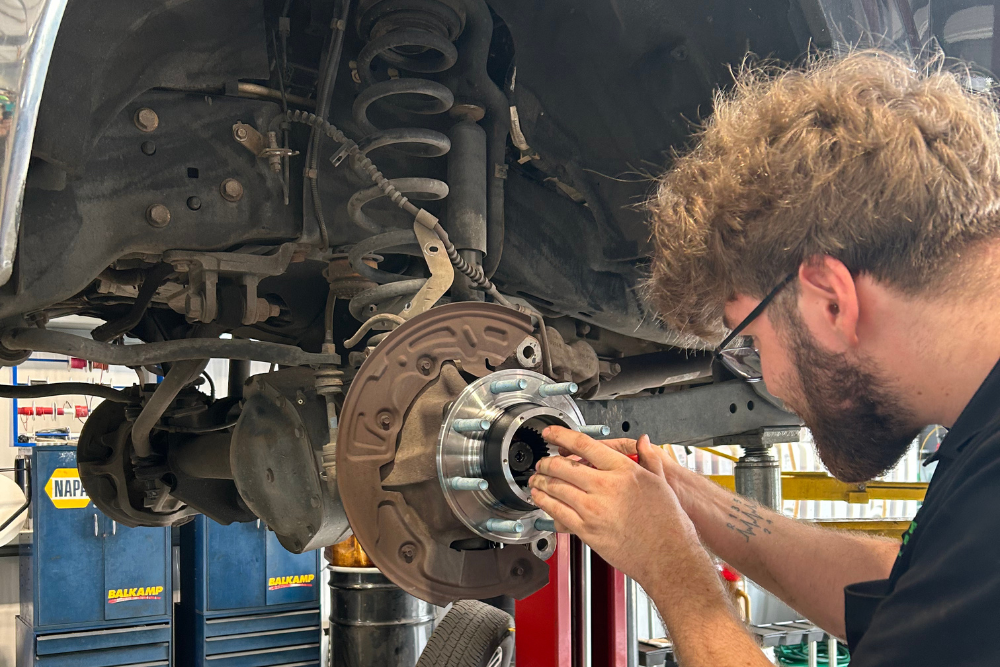
A brake inspection before the rain really sets in gives you a clear picture of where your vehicle stands. Every brake service at Griffis Automotive Clinic begins with a digital vehicle inspection that provides a photo-documented look at your brake system’s condition, so you know exactly what needs attention and why before any work is authorized.
A thorough inspection typically covers:
Catching small issues early helps prevent them from turning into bigger, costlier problems down the road.
This kind of proactive maintenance is especially valuable for drivers who commute through Groveland, Clermont, Montverde, Ferndale, Webster, and Bushnell, where wet roads and standing water are a regular part of the rainy season. Waiting until you hear grinding or feel a soft pedal often means wear has progressed further than a simple pad replacement can handle.
If you’re already noticing warning signs, don’t wait. Stop by Griffis Automotive Clinic at 125 Villa City Road, Groveland, FL 34736, or give us a call at (352) 243-2277 to schedule a brake inspection before your next rainy day commute.
At Griffis Automotive Clinic, we believe brake safety shouldn’t be a guessing game. Every driver who comes through our doors deserves a clear understanding of their vehicle’s condition and full confidence in the repairs we’ve done, especially heading into rainy season.
Yes, wet roads reduce tire traction and increase stopping distances, which means brakes have to work harder to bring a vehicle to a safe stop. A brake inspection before rainy season is the best way to confirm that pads, rotors, and fluid are in good shape for wet conditions.
Drivers can improve wet-road braking by increasing following distance, slowing down before turns, and avoiding sudden hard stops on slick pavement. Routine brake service before rainy season ensures worn components don’t compromise stopping power when roads get slick.
There’s no single answer for every vehicle since wear depends on driving habits and conditions, but a pre-rainy-season brake checkup is a smart habit for Florida drivers. Getting pads, rotors, and fluid checked before the rains arrive helps catch small issues before they become safety concerns.
A spongy pedal, a burnt smell near the reservoir, or fluid that looks dark and cloudy instead of clear are all signs brake fluid may need to be replaced. Scheduling a brake fluid check as part of routine maintenance helps keep the entire braking system performing reliably in wet weather.
Rainy season puts extra demand on your brake system, and worn pads, rotors, or contaminated brake fluid can turn a routine stop into a dangerous situation. If you’re searching for trusted brake service near Groveland, Griffis Automotive Clinic is ready to help you stay ahead of the rain. Staying ahead of these issues with a professional inspection is one of the most effective ways to protect yourself and your passengers on wet Groveland roads.
Visit us at Griffis Automotive Clinic, 125 Villa City Road, Groveland, FL 34736, or call us at (352) 243-2277 to schedule your brake inspection before the next storm rolls in. Our ASE-certified team is ready to help you drive into rainy season with confidence.