
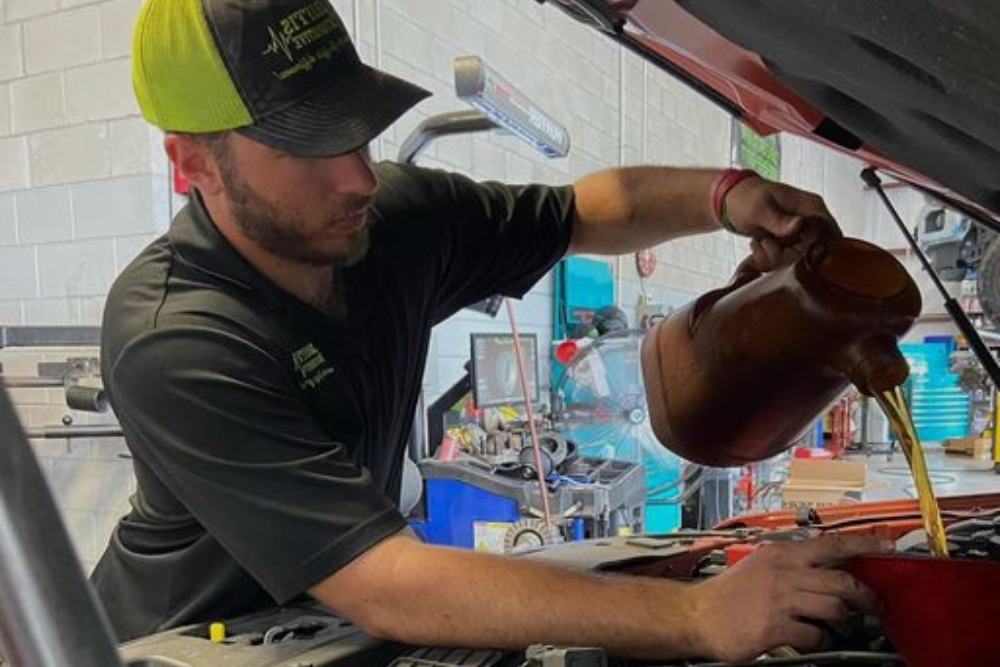
Once your car crosses 75,000 miles, your oil change routine can’t stay the same. At Griffis Automotive Clinic, we’ve seen it all, from engines that just needed regular care to those that gave up early because of skipped maintenance. Your engine has worked hard to get to this point, and it’s entering a new phase, where wear, heat, and friction start to take a bigger toll. High-mileage engines are more prone to oil leaks, sludge buildup, and worn seals, all of which can quietly shorten your engine’s life.
Skipping even one high-mileage oil change might not seem like a big deal, but for an older engine, it could lead to costly damage. The right oil, and the right maintenance, can be the difference between a car that lasts another 100,000 miles and one that’s in and out of the shop.
So, what makes high-mileage oil different? Why does it matter more now than ever? How can you make sure your older vehicle stays reliable for the road ahead? Let’s take a closer look.
Let’s start with a fact: engines don’t age like wine.
As the odometer climbs, components wear down. Rubber seals harden, oil consumption increases, and residue builds up inside the engine. That means what worked when your car was new doesn’t always work as well after 100,000 miles. This is especially true for the oil flowing through the heart of your engine.
High-mileage oil is designed to combat these changes. It’s blended with additives that help clean engine sludge, restore flexibility to seals, and reduce oil burn-off. It’s not just oil, it’s part of your strategy to protect your high-mileage engine from the inside out.
Need high-mileage oil service in Groveland, FL? Griffis Automotive Clinic is your trusted local choice. Call now or schedule online.
You’ve likely seen the labels: “High-Mileage Formula” or “For Engines Over 75,000 Miles.” But what’s actually in that bottle?
Here’s what sets high-mileage oil apart:
Choosing the right oil is crucial. If your car has more than 75,000 miles, using synthetic oil for high-mileage vehicles can be a game-changer, especially for those who want to keep their car reliable and efficient without buying a new one.
“Can I just go a little longer between oil changes now that I drive less?”
It’s a fair question, especially for those with older vehicles that aren’t driven daily. But the answer is: probably not.
Even when a car sits, engine oil can degrade due to temperature changes and moisture accumulation. Skipping or extending oil change intervals in an older car can lead to engine corrosion, sludge buildup, or increased wear when you finally start it up again.
Think of an oil change as a form of low-cost insurance. When it comes to engine maintenance over 100k miles, staying consistent is far more affordable than dealing with repairs later.
Let’s take a quick mental detour. Imagine if your oil filter could speak.
It would probably say something like, “I’ve caught months of grime, metal shavings, and sludge to protect your engine, but now I’m full.”
Oil filters have a tough job. Over time, they become saturated with debris, reducing oil flow and putting strain on your engine. Without regular oil and filter changes, the oil may bypass the filter completely. That means unfiltered, dirty oil is circulating through your engine.
The result? Increased wear, overheating, and ultimately, reduced engine life.
This is why oil changes are more than just replacing fluid, they’re about keeping the entire lubrication system healthy. When you’re driving an older car, that’s non-negotiable.
Still wondering if skipping one or two oil changes is really a big deal? Let’s break it down:
When your car is older, every part has been working harder for longer. Oil is the only thing standing between those parts and premature failure.
Let’s clear up a few myths:
Truth: Just because your car seems fine doesn’t mean there isn’t damage occurring under the surface.
Truth: Short trips can be worse for your oil because the engine never fully warms up, allowing moisture and acids to build up in the oil.
Truth: Not only do high-mileage oils contain unique additives, but the quality of the oil and the frequency of changes matter more as your vehicle ages.
If you’re searching for a trustworthy oil change shop near me, drivers in Groveland, FL, have a clear answer: Griffis Automotive Clinic.
Our shop is built on honesty, integrity, and doing the job right the first time. We don’t just perform oil changes. We care for your car like it’s our own. When it comes to engine maintenance over 100k miles, that level of care makes a big difference.
Our location has become a go-to for drivers who want to keep their vehicles running strong well past the 100,000-mile milestone. If you’re maintaining a fleet? We do that too.
Need high-mileage oil service in Groveland, FL? Griffis Automotive Clinic is your trusted local choice. Call now or schedule online.
How often should you change your oil when your vehicle has passed the 75k mark? It depends, but here’s a general guide:
We’ll help you determine the best schedule based on your driving habits, the age of your vehicle, and the type of oil that suits your engine.
There’s a big difference between maintaining a vehicle and prolonging its life.
Choosing the right oil, changing it on time, and using a trusted shop are all small steps that pay off big in the long run. Your vehicle doesn’t need to feel old just because it has a lot of miles on it. With the right care, many cars can easily surpass 200,000 miles and still run reliably.
Regular oil changes help reduce stress on other systems, improve fuel economy, and give you peace of mind on every drive.
For most vehicles over 75,000 miles, synthetic or synthetic blend oil is recommended. Synthetic oil offers better temperature stability, longer life, and more advanced additives that are beneficial for older engines. However, the best choice depends on your engine’s condition, driving habits, and manufacturer recommendations, something our technicians at Griffis Automotive Clinic can help you determine.
While changing your oil more often than recommended won’t harm your engine, it can be unnecessary and wasteful. Sticking to a professional maintenance schedule tailored to your vehicle and driving style is more cost-effective and environmentally responsible. Regular inspections will help determine what’s best for your specific car.
Along with oil changes, high-mileage vehicles benefit from regular checks of transmission fluid, coolant, brake fluid, belts, hoses, and tire condition. Catching issues early helps prevent bigger problems down the road. Our Digital Vehicle Inspections at Griffis Automotive Clinic provide a full overview of these items during your visit.
Your car has seen a lot of roads — and with the right care, it has plenty more ahead. At Griffis Automotive Clinic, we specialize in giving high-mileage vehicles the attention they deserve. From thorough inspections to high-quality oil tailored for older engines, we’re here to help you drive with confidence.
Let our experienced team take it from here. Call (352) 243-2277 or schedule your visit online at griffisautomotiveclinic.com. You’ll find us at 125 Villa City Rd, Groveland, FL 34736, just a short drive for long-term peace of mind.