
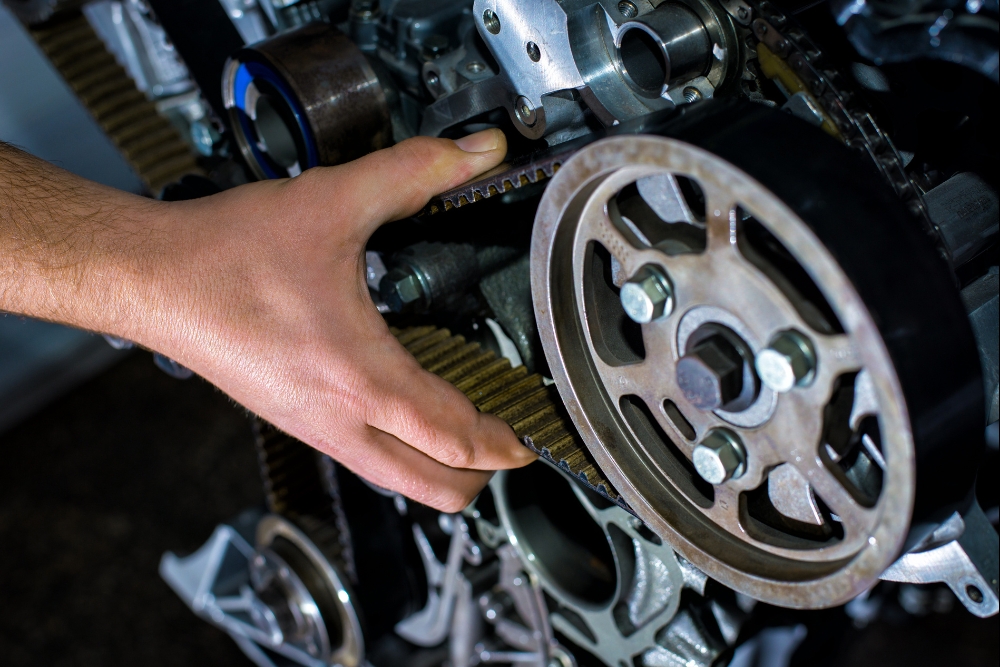
The holiday season brings family gatherings, road trips, and plenty of miles on your vehicle. The last thing you want is to be stranded on the side of the road with a broken timing belt. A worn or failing timing belt can cause catastrophic engine failure, leaving you with repair bills that far exceed the cost of preventive maintenance. At Griffis Automotive Clinic, we recommend scheduling your timing belt replacement now to avoid costly engine damage and unexpected breakdowns during your holiday travels.
In this guide, we’ll explain why timing belt service is essential, how to recognize the warning signs, and what you need to know to keep your engine running smoothly.
Your vehicle’s timing belt is a critical component that synchronizes the rotation of your engine’s crankshaft and camshaft. This precise coordination ensures that your engine’s valves open and close at the correct times during each cylinder’s intake and exhaust strokes.
When the timing belt functions properly, your engine runs smoothly and efficiently. However, if the timing belt breaks or slips, the valves and pistons can collide, causing severe internal engine damage. Unlike other components that show gradual signs of wear, timing belts often fail without warning.
The severity of timing belt failure depends on your engine type:
Most modern vehicles have interference engines, making timing belt replacement even more critical for preventing catastrophic failure.
Here’s something that surprises most car owners: the timing belt itself is a relatively inexpensive part. So why does timing belt replacement involve significant labor costs? It all comes down to the complexity of the job and the components that wear out alongside it.
Accessing your timing belt requires removing multiple engine components, including the serpentine belt, timing cover, and various pulleys. This labor-intensive process takes several hours, depending on your vehicle’s design.
On some vehicles, the engine is packed so tightly into the bay that technicians must remove additional parts just to reach the timing belt area.
But here’s what makes a broken timing belt so costly on an interference engine:
The repair costs for a broken timing belt can quickly add up to several times what preventive replacement would have cost. That’s why scheduled timing belt replacement is one of the smartest investments you can make in your vehicle’s longevity.
While timing belts don’t always give a warning before failure, certain symptoms indicate it’s time for replacement. Pay attention to these signs and schedule an inspection if you notice any of them:
Approaching your vehicle’s timing belt replacement interval? Schedule an inspection at Griffis Automotive Clinic in Groveland or call (352) 243-2277 for expert service.
Different manufacturers have varying recommendations for timing belt service. Here’s a quick reference guide for common vehicles:
| Vehicle Make | Typical Replacement Interval | Notes |
|---|---|---|
| Honda/Acura | 90,000 - 100,000 miles | Most models use interference engines |
| Toyota/Lexus | 90,000 miles | Some newer models use timing chains |
| Subaru | 105,000 miles | Boxer engines require specialized service |
| Nissan/Infiniti | 60,000 - 100,000 miles | Varies significantly by model |
| Ford | 60,000 - 100,000 miles | Depends on specific engine type |
| Chevrolet/GMC | 60,000 - 100,000 miles | Many newer models use timing chains |
| Dodge/Chrysler | 60,000 - 100,000 miles | Check owner's manual for specifics |
Keep in mind that many newer vehicles use timing chains instead of timing belts. Chains are more durable and typically last the life of the engine, though they still require periodic inspection.
Timing belt replacement isn’t just about swapping out the belt. Professional service includes multiple related components that typically wear at similar intervals. Here’s what a comprehensive timing belt service should include:
Core Components Replaced:
Additional Services:
This comprehensive approach saves you money in the long run by addressing components that would otherwise require another labor-intensive service shortly after the initial timing belt replacement.
Should you replace the water pump when doing a timing belt service? The answer is almost always yes, and here’s why.
Your water pump is driven by the timing belt and sits directly behind it. Accessing the water pump requires removing the timing belt anyway. Water pumps typically fail around the same mileage interval as timing belts, usually between 60,000 and 100,000 miles.
If you replace only the timing belt and your water pump fails 10,000 miles later, you’ll pay for the same labor twice. Smart timing belt service includes water pump replacement, saving you significant money on labor costs while ensuring both critical components are fresh.
When it comes to critical engine maintenance like timing belt service, experience and expertise matter. Our family-oriented shop has built a reputation in the Groveland community for honest, high-quality automotive repairs performed correctly the first time.
What Sets Us Apart:
Our commitment to honesty and integrity means you’ll never receive recommendations for services you don’t need. We take the time to explain why timing belt replacement is necessary and show you the condition of your components through our digital vehicle inspection system.
Most manufacturers recommend timing belt replacement every 60,000 to 100,000 miles, though specific intervals vary by make and model. Check your owner’s manual or consult with our technicians for your vehicle’s exact replacement schedule.
If your timing belt breaks while driving, your engine will immediately stop running, and you’ll lose power. In interference engines, the valves and pistons can collide, causing extensive internal damage that requires costly repairs, including bent valves, damaged pistons, and potentially a complete engine rebuild.
Driving with a worn timing belt is extremely risky and not recommended. A deteriorating belt can break without warning, leaving you stranded and potentially causing thousands of dollars in engine damage. If you suspect timing belt wear, schedule an inspection immediately.
Yes, replacing the water pump during timing belt service is highly recommended. The water pump is typically driven by the timing belt and often fails around the same mileage interval. Since accessing the water pump requires removing the timing belt anyway, replacing both components together saves significant labor costs.
Timing belt replacement typically takes 3 to 5 hours, depending on your vehicle’s make and model. Some vehicles require more extensive disassembly to access the timing belt, while others are more straightforward. Our technicians will provide an accurate time estimate based on your specific vehicle.